Deteksi Dini Risiko Sindrom Metabolik melalui Pemeriksaan Kesehatan ASN
Abstract
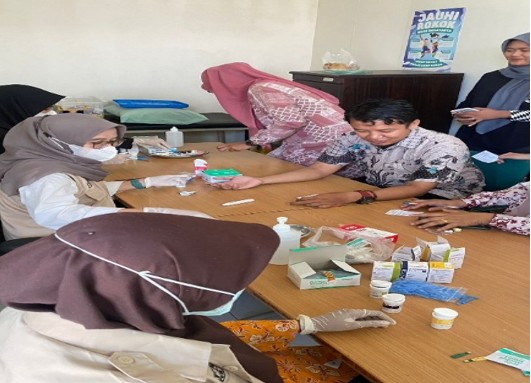
This community service activity aimed to conduct early detection of metabolic syndrome risk factors among civil servants, identify their health status based on metabolic parameters, and increase awareness of the importance of routine health check-ups. The method was implemented through comprehensive health examinations, including measurements of blood pressure, body mass index, waist circumference, blood glucose, uric acid, and cholesterol levels among 230 participants, followed by brief individual counseling based on examination results. The activity was carried out through preparation, registration, examination, counseling, and evaluation stages. The results showed that a significant proportion of participants had metabolic risk factors, with obesity prevalence at 46.5%, overweight 18.3%, elevated cholesterol 45.2%, high blood pressure 32.2%, increased uric acid 32.6%, and elevated blood glucose 11.7%. The counseling provided helped participants understand their health conditions and encouraged healthier lifestyle behaviors. In conclusion, health screening is effective in early detection of metabolic syndrome risk factors and in improving awareness of routine examinations as promotive and preventive efforts against non-communicable diseases in the workplace.
Downloads
References
Saklayen, M. G. (2018). The global epidemic of the metabolic syndrome. Current Hypertension Reports, 20(2), 12. https://doi.org/10.1007/s11906-018-0812-z
Badan Kepegawaian Negara. (2022). Statistik aparatur sipil negara 2022. Badan Kepegawaian Negara Republik Indonesia.
Grundy, S. M. (2016). Metabolic syndrome update. Trends in Cardiovascular Medicine, 26(4), 364–373. https://doi.org/10.1016/j.tcm.2015.10.004
Hartono, R., & Putri, M. (2025). Gender-specific determinants of high cholesterol among Indonesian adults. Media Kesehatan Politeknik Kesehatan Makassar. Retrieved from https://ojs3.poltekkes-mks.ac.id/index.php/medkes/article/view/1949
Kaimudin, N., Mus, R., Pentury, J. C., Abbas, M., & Latuconsina, V. Z. (2025). Hubungan indikator antropometri dengan kadar kolesterol total pada wanita usia subur. Jurnal SAGO Gizi dan Kesehatan, 6(1), 137–142. Retrieved from https://ejournal.poltekkesaceh.ac.id/index.php/gikes/article/view/2197
Kementerian Kesehatan Republik Indonesia. (2023). Panduan praktis deteksi dini faktor risiko penyakit tidak menular. Direktorat Pencegahan dan Pengendalian Penyakit Tidak Menular, Kementerian Kesehatan RI.
Kementerian Kesehatan Republik Indonesia. (2024). Hasil Survei Kesehatan Indonesia (SKI) 2023. Retrieved from https://www.badankebijakan.kemkes.go.id/hasil-ski-2023/
Nguyen, T. T., Nguyen, T. H., & Le, T. H. (2022). Prevalence of metabolic syndrome and associated factors among office workers in a developing country. International Journal of Environmental Research and Public Health, 19(3), 1289. doi:10.3390/ijerph19031289
PERKENI. (2021). Pedoman pengelolaan dan pencegahan diabetes melitus tipe 2 dewasa di Indonesia 2021. Retrieved from https://pbperkeni.or.id/wp-content/uploads/2021/06/Pedoman-Pengelolaan-DM-Tipe-2-Dewasa-di-Indonesia-eBook-PDF.pdf
Purwati, S., & Wahyuningsih, E. (2022). Faktor risiko sindrom metabolik pada tenaga kesehatan di rumah sakit: Studi cross-sectional. Jurnal Gizi Klinik Indonesia, 19(1), 10–18. doi:10.22146/ijcn.68923
Rahajeng, E., & Tuminah, S. (2009). Prevalensi hipertensi dan determinannya di Indonesia. Majalah Kedokteran Indonesia, 59(12), 580–587 .
Sugiarto, A., Ristrini, & Tjahja, I. N. E. (2021). Hubungan aktivitas fisik dengan kejadian obesitas sentral pada pegawai pemerintah. Buletin Penelitian Kesehatan, 49(3), 187–196. doi:10.22435/bpk.v49i3.4587
World Health Organization. (2023). Physical activity. Retrieved from https://www.who.int/news-room/fact-sheets/detail/physical-activity
World Health Organization. (2024a). Noncommunicable diseases. Retrieved from https://www.who.int/news-room/fact-sheets/detail/noncommunicable-diseases
World Health Organization. (2024b). Obesity and overweight. Retrieved from https://www.who.int/news-room/fact-sheets/detail/obesity-and-overweight
Dengan mengirimkan artikel ke Jurnal Pengabdian Masyarakat Cendikia Jenius, penulis setuju dengan kebijakan ini. Tidak diperlukan persetujuan dokumen khusus.
Hak Cipta :

Lisensi Creative Commons Atribution-ShareAlike 4.0 Internasional
Hak cipta atas artikel apa pun di Jurnal Pengabdian Masyarakat Cendikia Jenius dipegang penuh oleh penulisnya di bawah Lisensi Creative Commons Atribution-ShareAlike 4.0 Internasional (CC BY-SA 4.0)
- Hak cipta pada setiap artikel adalah milik penulis.
- Penulis mempertahankan semua hak mereka atas karya yang diterbitkan, tak terbatas pada hak-hak yang diatur dalam laman ini.
- Penulis mengakui bahwa Jurnal Pengabdian Masyarakat Cendikia Jenius sebagai yang pertama kali mempublikasikan dengan Lisensi Creative Commons Atribution-ShareAlike 4.0 Internasional (CC BY-SA 4.0).
- Penulis dapat memasukan tulisan secara terpisah, mengatur distribusi non-ekskulif dari naskah yang telah terbit di jurnal ini kedalam versi yang lain (misal: dikirim ke respository institusi penulis, publikasi kedalam buku, dll), dengan mengakui bahwa naskah telah terbit pertama kali pada Jurnal Pengabdian Masyarakat Cendikia Jenius.
- Penulis menjamin bahwa artikel asli, ditulis oleh penulis yang disebutkan, belum pernah dipublikasikan sebelumnya, tidak mengandung pernyataan yang melanggar hukum, tidak melanggar hak orang lain, tunduk pada hak cipta yang secara eksklusif dipegang oleh penulis.
- Jika artikel dipersiapkan bersama oleh lebih dari satu penulis, setiap penulis yang mengirimkan naskah menjamin bahwa dia telah diberi wewenang oleh semua penulis bersama untuk menyetujui hak cipta dan pemberitahuan lisensi (perjanjian) atas nama mereka, dan setuju untuk memberi tahu rekan penulis persyaratan kebijakan ini. Jurnal Pengbadian Masyarakat Cendikia Jenius tidak akan dimintai pertanggungjawaban atas apa pun yang mungkin timbul karena perselisihan internal penulis.
Lisensi :
Jurnal Pengabdian Masyarakat Cendikia Jenius diterbitkan berdasarkan ketentuan Lisensi Creative Commons Atribution-ShareAlike 4.0 Internasional (CC BY-SA 4.0) Lisensi ini mengizinkan setiap orang untuk :
Menyalin dan menyebarluaskan kembali materi ini dalam bentuk atau format apapun serta menggubah, memperbaiki, dan membuat ciptaan turunan, bahkan untuk kepentingan komersial, selama mereka mencantumkan kredit kepada Penulis atas ciptaan asli.